AI-human audio collaboration: Create, edit and distribute audio
Learn how AI-human audio collaboration supports audio generation, audio editing and practical workflows. This guide explains the core approach, common use cases and what to consider before applying it.
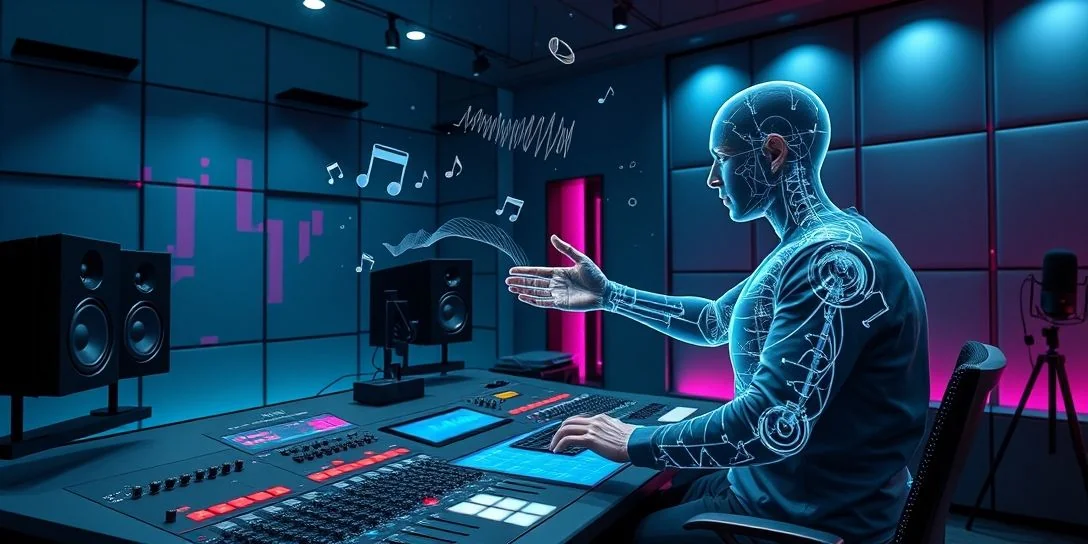
The New Sound of Content Creation
The audio content landscape is undergoing a seismic shift as artificial intelligence transforms how we create, edit, and distribute sound. What once required expensive studio time, professional voice talent, and technical expertise now happens in browsers and apps that anyone can use. But here’s where it gets interesting: we’re not talking about AI replacing humans entirely. The real magic happens in the collaboration between human creativity and machine efficiency.
Look, I’ve been around audio production long enough to remember when editing meant physically cutting tape. The changes we’re seeing now? They’re happening at breakneck speed. Just last month, I watched a colleague generate an entire podcast episode from a blog post in under three minutes-complete with multiple voices, sound effects, and professional pacing. The tools have evolved from novelty to necessity practically overnight.
Why Audio Content Matters More Than Ever
We’re living through what I’d call the audio renaissance. Podcast listenership has exploded, audiobooks are outselling print in some categories, and voice interfaces are everywhere. People consume content while commuting, working out, doing chores-audio fits into lives in ways visual content simply can’t.
But creating quality audio has always been a bottleneck. Recording studios, voice actors, audio engineers-it adds up quickly in both time and money. That’s where AI steps in, not as replacement, but as force multiplier. The smartest content creators I know aren’t fearing this technology; they’re leaning into it to do things they never could before.
The Technical Marvels Behind Modern AI Audio
Voice Cloning: Your Digital Double
Voice cloning technology has reached almost unsettling levels of accuracy. Systems like VALL-E can now replicate unseen speakers from just three seconds of sample audio. That’s not just impressive-it’s downright revolutionary for content creators.
I’ve tested half a dozen voice cloning tools, and the consistency they maintain across episodes is remarkable. You record a short sample once, and the AI handles the rest. No more scheduling voice talent around recording sessions or dealing with vocal fatigue. The technology does have limitations-emotional range isn’t quite human-level yet-but for straightforward narration, it’s more than adequate.
Multi-Speaker Dialogue Generation
This is where things get particularly exciting. Tools like DeepMind’s audio generation models can create realistic banter between multiple speakers in seconds. You feed in a script with speaker markers, and the system generates dialogue that actually sounds like different people conversing.
I recently used this to transform a dense research paper into an engaging discussion format. The AI created what felt like a formal conversation between experts, making complex topics accessible. The system even adds realistic disfluencies-those “ums” and “ahs” that make dialogue feel authentically human rather than robotic.
Environmental Sound Design
Meta’s Audiobox platform demonstrates how far we’ve come in environmental audio generation. You can describe a soundscape like “a running river and birds chirping” and get surprisingly realistic results. Even more impressive: you can combine voice samples with text prompts to make someone “speak sadly in a cathedral” or “excitedly in an outdoor setting.”
The acoustic modeling here is sophisticated enough to understand how different environments affect sound propagation. It’s not perfect-sometimes the reverb feels slightly off-but for quick prototyping or adding atmosphere to existing recordings, it’s incredibly useful.
Practical Applications for Content Creators
Podcast Production Revolution
The podcasting workflow has been completely transformed. Tools like Wondercraft’s AI podcast generator allow you to upload documents or paste text and automatically generate multi-speaker episodes. The system handles voice differentiation, adds appropriate host banter, and even suggests musical cues.
What shocked me was the visual timeline editor. You can drag voice clips and music beds to rearrange content without any technical audio engineering knowledge. Collaboration features let remote teams share project links for feedback, collecting timestamped comments directly within the platform.
Audiobook Accessibility
Audiobook production has traditionally been expensive and time-consuming. AI changes this equation dramatically. Platforms can now generate narrations in multiple voices, maintain character consistency across hours of content, and even adjust pacing to match narrative tension.
The accessibility implications here are enormous. Books that might never have received audio versions due to budget constraints can now be converted affordably. I’ve seen indie authors produce professional-quality audiobooks for fractions of traditional costs.
Multilingual Content Expansion
Here’s where AI audio truly shines: breaking language barriers. Tools like LOVO’s podcast solutions support 100+ languages, allowing creators to generate same-content episodes in different languages from a single script. The voice quality varies by language-some are more convincing than others-but the technology improves monthly.
I recently worked with an educational content creator who used this to reach international audiences without hiring multilingual voice actors. The cost savings were substantial, and the engagement metrics from non-English markets jumped significantly.
The Technical Architecture Making It Possible
Hierarchical Tokenization Systems
Modern AI audio systems use sophisticated tokenization approaches. As detailed in AssemblyAI’s generative audio overview, models now tokenize audio into both semantic and acoustic components. This captures both phonetic details and broader prosody elements, allowing for more controlled generation.
The shift from discrete tokens to continuous vector representations (like in NaturalSpeech 2) has been crucial. It reduces sequence length challenges that plagued earlier systems, making longer-form audio generation more stable and coherent.
Latent Diffusion Models
Audio generation has adopted techniques from image generation, particularly latent diffusion models. These allow for non-autoregressive production, which minimizes error propagation across long sequences. The result is higher-fidelity output that maintains quality across extended generations.
The processing speeds are mind-boggling. DeepMind’s model operates 40x faster than real time, enabling instant audio previews for editors. That single-chip processing capability means creators can iterate rapidly without hardware bottlenecks.
Cross-Modal Embeddings
Perhaps the most advanced development is the creation of meaningful embeddings between text and audio. Systems can now understand the relationship between descriptive language and sonic characteristics. This enables both text-to-audio generation and audio-to-text description with surprising accuracy.
I’ve seen this used to generate music from text descriptions like “haunting Celtic vocals” or “uplifting corporate background score.” The results aren’t always perfect, but they’re good enough for mood-setting and prototyping.
Ethical Considerations and Responsible Implementation
Voice Watermarking and Authentication
With great power comes great responsibility-and potential for misuse. Voice impersonation is a real concern, but developers are implementing robust countermeasures. DeepMind’s SynthID technology embeds imperceptible watermarks that help trace content origin and prevent misuse.
Meta’s systems implement similar protections, including audio watermarking resistant to common modification attacks. Some platforms are even experimenting with voice authentication safeguards similar to CAPTCHAs, requiring live spoken prompts that change rapidly to verify real users.
Copyright and Ownership Questions
The legal landscape around AI-generated audio remains murky. Who owns the copyright to a voice clone? What about music generated from text descriptions? These questions are working their way through courts and legislative bodies.
Smart creators are being proactive about this. Many platforms offer clear licensing terms for commercial use of AI-generated audio. Royalty-free music generators like those discussed on Digital Ocean’s AI music overview provide explicit usage rights, avoiding potential copyright claims.
Authenticity and Disclosure
There’s an ongoing debate about whether AI-generated content should be disclosed to audiences. My position? Transparency builds trust. Listeners appreciate knowing how content was created, especially when synthetic voices are involved.
Some platforms are building disclosure features directly into their tools, making it easy to credit AI assistance. This feels like the right approach-acknowledging the technology while still valuing the human creativity that guides it.
Implementation Strategies for Content Teams
Workflow Integration
The most successful teams I’ve worked with treat AI audio tools as enhancements rather than replacements. They develop template workflows for common tasks, helping team members integrate AI efficiently into existing production processes.
A typical workflow might involve:
- Human-written script creation
- AI voice generation for initial narration
- Human editing for emotional nuance and pacing adjustments
- AI-generated sound effects and music beds
- Final human quality control and mastering
This hybrid approach leverages AI’s efficiency while maintaining human creative oversight.
Budget Allocation and Tool Selection
Here’s where I see many teams making mistakes: they either overspend on premium tools or underestimate the learning curve. My advice? Start with free tiers and no-cost options like Giz’s AI audio generator, which offers unlimited prompt attempts without sign-up requirements.
Allocate budget specifically for experimentation. The field is moving so rapidly that tools available today may be obsolete in six months. Setting aside resources for testing emerging features ensures you stay ahead of the curve.
Skill Development and Training
The most valuable skill right now isn’t technical audio engineering-it’s creative prompting. Learning how to describe voices, emotions, and soundscapes effectively yields dramatically better results than random experimentation.
Teams should invest in prompt engineering training specifically for audio generation. Understanding how different platforms interpret terms like “warm voice” versus “professional narration” makes all the difference in output quality.
Future Directions and Emerging Trends
Real-Time Style Transfer
The next frontier appears to be real-time voice style transfer. Imagine converting a recording from conversational to dramatic delivery without re-recording, or adjusting accent and pacing on the fly. Early implementations show promise, though consistency across longer passages remains challenging.
Emotional Intelligence Integration
Current systems struggle with nuanced emotional expression. The next generation will likely incorporate better emotional intelligence, detecting subtle cues in source material and applying appropriate vocal characteristics. This could make synthetic narration virtually indistinguishable from human performance.
Personalized Audio Experiences
We’re moving toward dynamically generated audio content tailored to individual listeners. Imagine podcasts that adjust pacing based on your attention patterns, or audiobooks that modify character voices to match listener preferences. The infrastructure for this exists-it’s mostly a matter of refining the personalization algorithms.
The Human Element in AI-Augmented Audio
Despite all these technological advances, the human creative spirit remains essential. AI excels at execution, but it still requires human direction, curation, and quality control. The most compelling audio content comes from teams that understand how to blend technological capability with artistic vision.
I’ve always found it odd that some creators resist these tools. They’re not replacing creativity-they’re removing technical barriers that previously limited it. The ability to experiment freely, iterate rapidly, and produce at scale actually expands creative possibilities rather than constricting them.
The future of audio content isn’t about machines taking over. It’s about smart collaboration between human creativity and artificial intelligence. Those who embrace this partnership will create audio experiences we can barely imagine today.
Resources and Further Reading
- DeepMind Audio Generation Research
- Meta Audiobox Platform
- AssemblyAI Generative Audio Overview
- DIA-TTS AI Audio Guide
- Giz AI Audio Generator
- Wondercraft AI Podcast Tools
- NoteGPT Podcast Generator
- Magic Hour Voice Generator
- Audio Cleaner Podcast Maker
- LOVO Podcast Solutions
- Digital Ocean AI Music Generators
- Beatoven AI Music Guide
- Music Creator AI Platform
Frequently asked questions
What is the future of human-AI collaboration in audio production?
AI is viewed as a force multiplier for human creators, not a replacement. The hybrid workflow has AI handle technical execution (initial narration, sound design, assembly) while humans focus on strategy, scriptwriting, emotional nuance, editing, and quality control. The most valuable skill for audio creators is prompt engineering - effectively describing emotions, voices, and soundscapes to achieve desired outputs.
What trends are driving the audio renaissance?
Audio content is becoming essential for its ability to integrate into daily life. Voice cloning enables accurate replication from 3-second samples. Multi-speaker dialogue generates realistic interactions between personas. Environmental audio tools use natural language prompts for sophisticated sound design. AI is lowering barriers for independent creators to produce high-quality audiobooks and multilingual content at scale.
What technical advances are enabling future AI audio?
Hierarchical tokenization separates semantic meaning from acoustic details. Latent diffusion models borrowed from image generation improve stability. Cross-modal embeddings enable synthesis from multiple inputs. Processing speeds achieve 40x faster than real-time. The next frontier is real-time style transfer for live adjustments to accent, pacing, and delivery.
Will AI audio replace human voice actors?
Not entirely. Despite rapid progress, the human role remains essential for emotional depth, nuanced performance, and creative direction. AI handles repetitive tasks like first-pass narration, multilingual dubbing, and sound design. Humans provide the artistic vision, emotional truth, and quality control that make audio compelling. The most successful creators use AI to enhance their capabilities, not replace their craft.
What predictions exist for AI audio in the next 3-5 years?
Personalized audio adapting pacing, tone, and voices to individual listeners. Real-time style transfer for live accent adjustments. Emotional depth approaching indistinguishability from human performance. Transparent AI disclosure becoming standard practice. Dynamic audio content that responds to listener behavior. The human role of director, curator, and quality controller will remain essential for compelling audio experiences.
Related articles
-

AI audio ads: Create, edit and distribute audio
Learn how AI audio ads supports audio generation, audio editing and practical workflows. This guide explains the core approach, common use cases and what to consider before applying it.
Audio & Voice AI audio generation audio editing voice workflows content creation 10 min read
Published Updated By Julia M. Gil
-
AI audio editing: Create, edit and distribute audio
Learn how AI audio editing supports audio generation, audio editing and practical workflows. This guide explains the core approach, common use cases and what to consider before applying it.
Audio & Voice AI audio generation audio editing voice workflows content creation 9 min read
Published Updated By Julia M. Gil
-
AI audio for podcasts: Create, edit and distribute audio
Learn how AI audio for podcasts supports audio generation, audio editing and practical workflows. This guide explains the core approach, common use cases and what to consider before applying it.
Audio & Voice AI audio generation audio editing voice workflows content creation 9 min read
Published Updated By Julia M. Gil
Keep exploring
FreeAIGeneration is more than this article. The editors and calculators below are real, free and run in your browser.