AI music generation: Create, edit and distribute audio
Learn how AI music generation supports audio generation, audio editing and practical workflows. This guide explains the core approach, common use cases and what to consider before applying it.
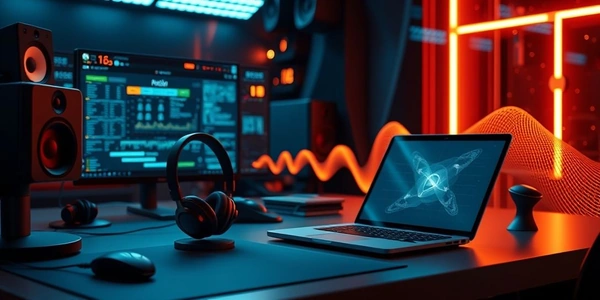
The Silent Revolution in Music Creation
Look, I’ll be honest-when I first heard about AI music generators, I was skeptical. The idea that algorithms could compose anything beyond generic elevator music seemed far-fetched. But then I spent an afternoon with AIVA and came away genuinely shocked at what these tools can accomplish now. We’re talking about complete musical compositions generated in seconds across hundreds of styles, from cinematic orchestral scores to synthwave bangers.
The barrier to entry for music production has completely collapsed. Used to be you needed thousands of dollars in equipment, years of training, and natural talent. Now? Anyone with an internet connection can create professional-sounding tracks. It’s honestly kind of ridiculous how fast this has happened.
What Exactly Are AI Music Generators?
At their core, AI music generators use machine learning algorithms trained on massive datasets of existing music. They analyze patterns in melody, harmony, rhythm, and structure-then generate new compositions based on your input. The technology has evolved from simple melody generators to systems that can create full, multi-instrument arrangements.
The OpenAI Jukebox project trained on a dataset of 7,116 songs spanning countless genres and artists. Their Sample Explorer reveals just how diverse the training data is-everything from Frank Sinatra to Kanye West, with genres covering jazz, hip hop, metal, gospel, and pretty much everything in between. What’s fascinating is how these systems use different model variants; some are lyrics-conditioned while others focus purely on instrumental composition.
Here’s the thing that surprised me most: these aren’t just remixing existing songs. The AI creates genuinely novel compositions by understanding musical patterns at a fundamental level. It’s like having a collaborator who’s studied every piece of music ever recorded but can still come up with something new.
Top Free AI Music Generators You Should Try Today
AIVA: The Classical Powerhouse
AIVA stands out for its sheer versatility and professional-grade output. With over 250 predefined styles and the ability to create custom style models, it’s become my go-to for quick soundtrack ideas. The interface is surprisingly intuitive-you pick a style, set some parameters, and within seconds you’ve got a complete composition.
Their free plan includes 3 downloads per month (up to 3 minutes each), which is plenty for casual creators. But here’s where it gets interesting: if you’re serious about commercial work, their Pro plan (around €33/month) gives you full copyright ownership and 300 downloads monthly. I’ve always found it odd that more people don’t talk about the copyright implications-with the free version, you need to credit AIVA and can’t monetize your creations.
What shocked me was discovering that major companies like NVIDIA and TED have used AIVA for their projects. When you listen to their showcase tracks, you understand why-the quality is legitimately professional.
LANDR: More Than Just Mastering
Most people know LANDR for its AI mastering services, but their ecosystem has expanded significantly. Their approach is more product-driven, with clear CTAs guiding users from free trials to paid plans. The blog content focuses heavily on education-beats, mixing, vocal production-making it a great starting point for beginners.
Speaking of which, their recovery pages for 404 errors actually demonstrate smart UX design. Instead of dead ends, they redirect users to relevant category hubs and curated content. More platforms should take note-it’s a simple way to salvage lost traffic and keep users engaged.
OpenAI’s Jukebox: The Research Powerhouse
While not a consumer-facing product in the traditional sense, Jukebox represents the cutting edge of what’s possible. Their Sample Explorer is a treasure trove for understanding how AI interprets different musical styles. The samples use high sampling temperatures (mostly 0.96-1.0), which means the generations prioritize creativity over strict adherence to patterns.
The collection taxonomy reveals different generation objectives: continuations, unseen lyrics, re-renditions in other styles. You can find examples where the AI blends artist styles-imagine 25% Frank Sinatra mixed with 75% modern pop artist. The results are… interesting, to say the least.
How AI Music Generation Actually Works
Let me break this down without getting too technical. These systems use something called neural networks trained on massive music libraries. They learn musical patterns the same way you’d learn a language-by exposure to countless examples.
The training process involves analyzing:
- Melodic contours and phrases
- Harmonic progressions
- Rhythmic patterns
- Instrumentation combinations
- Structural elements (verse, chorus, bridge)
When you generate a new track, the AI essentially predicts what should come next based on your input parameters. It’s not copying existing music-it’s creating new sequences that follow learned musical rules.
What most people don’t realize is how much customization is possible. With tools like AIVA, you can upload your own audio or MIDI influences to steer the generation toward specific styles. It’s like having a collaborator who never gets tired or complains about your ideas.
Practical Applications: Beyond Just Background Music
Content Creation and Streaming
YouTube creators, podcasters, and streamers are probably the biggest beneficiaries right now. Creating original background music that won’t get flagged by content ID systems is huge. I’ve seen gaming streamers generate mood-specific tracks for different game segments-tense music for boss fights, upbeat tracks for exploration.
The economics are undeniable: instead of paying licensing fees or risking copyright strikes, creators can generate unlimited original music. It’s democratizing content creation in ways we’re only beginning to understand.
Game Development and Indie Projects
Small game studios and indie developers can create custom soundtracks without hiring composers. The ability to generate variations on themes means consistent musical identity throughout a project. I worked with a developer who used AI to create 20 variations of their main theme-each fitting different game scenarios.
Personal Projects and Learning
Aspiring musicians can use these tools to study composition techniques or generate backing tracks for practice. The educational value is massive-being able to deconstruct AI-generated compositions teaches you about musical structure in ways traditional lessons can’t match.
The Limitations (And Why They Matter)
Call me old-fashioned, but AI music still struggles with emotional depth and narrative coherence over longer pieces. While individual sections can sound impressive, creating a 5-minute composition that builds tension and releases it appropriately remains challenging.
There’s also the issue of predictability. After generating dozens of tracks, you start noticing recurring patterns and harmonic progressions. The AI tends to favor certain chord changes and melodic shapes it encountered frequently in training data.
Technical limitations exist too-most free versions have download restrictions and lower audio quality exports. If you need broadcast-quality WAV files, you’ll likely need to upgrade to paid plans.
Ethical Considerations You Can’t Ignore
The elephant in the room is copyright and ownership. With free plans, you typically don’t own the copyright to generated compositions. This creates weird situations where you might create something amazing but can’t commercially exploit it without upgrading.
There’s also the question of training data ethics. Most companies aren’t transparent about their training datasets-are they using copyrighted material? What about artist compensation? These questions remain largely unanswered.
I’ve noticed the industry starting to address these concerns. Adobe’s blog emphasizes content authenticity and ethical AI development in their Responsibility section. Other platforms are following suit, but we’re still in the early days of establishing clear guidelines.
Getting Started: Your First AI Composition
Ready to dive in? Here’s a quick workflow I’ve developed after testing dozens of platforms:
- Start with AIVA’s free account - It gives you the most flexibility upfront
- Experiment with different styles - Don’t just stick to one genre
- Use the custom style features - Upload reference tracks that match your vision
- Generate multiple variations - Save the ones that resonate
- Learn basic editing - Most platforms let you tweak generated tracks
The key is embracing experimentation. Your first few generations might not be amazing, but you’ll quickly develop an intuition for what inputs yield better results.
The Future Sounds Interesting
Based on current trajectories, I’m predicting several developments in the near future:
- Real-time generation for interactive media and games
- Style transfer between artists (imagine generating new “Beatles” songs)
- Better long-form composition capabilities
- Integration with traditional DAWs
The technology is advancing at breakneck speed. What seems impressive today will likely feel primitive in just a couple of years.
Parting Thoughts
AI music generation isn’t about replacing human musicians-it’s about expanding creative possibilities. These tools lower barriers for beginners while providing new inspiration sources for professionals. The quality available for free is honestly staggering when you consider what similar capabilities would have cost just five years ago.
The landscape is evolving rapidly, with platforms like LANDR focusing on educational content and Adobe emphasizing ethical development through their Content Authenticity Initiative. Meanwhile, research projects like OpenAI’s Jukebox continue pushing technical boundaries.
Whether you’re a content creator needing background music or someone curious about composition, there’s never been a better time to experiment. The tools are here, they’re accessible, and they’re only getting better.
Resources
Frequently asked questions
Can free AI music generators create professional-quality soundtracks?
Yes, tools like AIVA offer over 250 predefined styles and can generate professional-grade soundtracks. The free plan allows 3 downloads per month (up to 3 minutes each, with attribution). LANDR provides AI mastering, beat creation, and mixing tools. OpenAI Jukebox pushes boundaries with style blending. For background music, YouTube videos, podcasts, and indie games, these tools are excellent.
What are the limitations of free AI music tools?
Free plans limit downloads (AIVA: 3/month), restrict commercial use, offer lower audio quality, and may require attribution. Full copyright ownership requires paid plans (AIVA Pro: ~33/month, 300 downloads). For professional releases or commercial projects, upgrading is necessary to avoid licensing issues.
How does AI music generation work technically?
AI music generators use deep learning models trained on thousands of musical compositions, learning patterns in melody, harmony, rhythm, and structure. Tools like AIVA let you upload MIDI or audio influences to guide generation. Users select genres, moods, instruments, and tempo, and the AI creates original compositions matching these parameters in seconds.
What are the best use cases for free AI-generated music?
Content creators use AI music for YouTube background tracks, podcast intros/outros, and live stream music to avoid copyright claims. Game developers generate custom soundtracks. Educators create practice backing tracks. Personal projects like videos and presentations benefit from royalty-free AI-composed music.
Can I use AI-generated music commercially without attribution?
Commercial use without attribution depends on the tool and plan. Free tiers usually require attribution or only permit non-commercial use. Paid plans like AIVA Pro grant full copyright ownership. Always check license terms before using AI-generated music in commercial projects or monetized content.
Related articles
-
AI music generation: Create, edit and distribute audio
Learn how AI music generation supports audio generation, audio editing and practical workflows. This guide explains the core approach, common use cases and what to consider before applying it.
Audio & Voice AI audio generation audio editing voice workflows content creation 9 min read
Published Updated By Julia M. Gil
-
AI audio generation: Create, edit and distribute audio
Learn how AI audio generation supports audio generation, audio editing and practical workflows. This guide explains the core approach, common use cases and what to consider before applying it.
Audio & Voice AI audio generation audio editing voice workflows content creation 9 min read
Published Updated By Julia M. Gil
-
AI music generation: Create, edit and distribute audio
Learn how AI music generation supports audio generation, audio editing and practical workflows. This guide explains the core approach, common use cases and what to consider before applying it.
Audio & Voice AI audio generation audio editing voice workflows content creation 10 min read
Published Updated By Julia M. Gil
Keep exploring
FreeAIGeneration is more than this article. The editors and calculators below are real, free and run in your browser.