AI supply chain: Create and refine visual content
Learn how AI supply chain supports image generation, image editing and practical workflows. This guide explains the core approach, common use cases and what to consider before applying it.
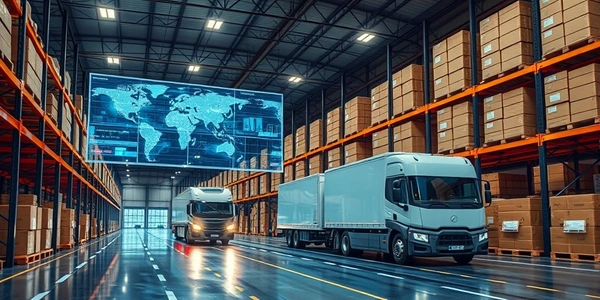
The Ticking Clock on Traditional Supply Chains
Look, we’ve all seen the headlines-supply chain disruptions costing companies billions, shipping delays stretching for months, and inventory piling up in all the wrong places. What’s shocking is that most enterprises are still fighting these fires with the same tired playbooks from a decade ago.
Here’s the uncomfortable truth: by 2026, companies without AI-driven supply chains will be paying what amounts to a 30% stupidity tax on their logistics operations. Meanwhile, early adopters are already seeing returns that make their initial investments look like rounding errors.
I’ve always found it odd that we trust AI with medical diagnoses and financial trading but hesitate to let it optimize our container routes and warehouse layouts. The data’s been clear for years-manual supply chain management simply can’t process the thousands of variables that impact modern logistics. We’re trying to play chess while only seeing three squares at a time.
Why 2026 Marks the Point of No Return
The convergence of several technologies has created what I’d call an “optimization singularity” for supply chains. We’re not talking about incremental improvements here-we’re looking at step-function changes in how goods move across the planet.
Multiple studies (IBM, Oracle, Microsoft) confirm that AI-powered decision-making transforms everything from partner data exchange to omnichannel fulfillment. The days of reacting to supply chain disruptions are ending; we’re entering an era of predicting and preventing them entirely.
Be that as it may, the implementation window is narrowing faster than most executives realize. Companies starting their AI supply chain journeys today will be playing catch-up in 2026-and the gap between leaders and laggards will become structural rather than tactical.
The Core Components of AI-Driven Supply Chains
Predictive Demand Forecasting That Actually Works
Traditional forecasting methods have about as much accuracy as weather predictions from the 1980s. You know-vaguely directional but completely useless for specific decisions. Modern AI systems analyze hundreds of data points most companies don’t even realize they have: social media trends, weather patterns, competitor pricing movements, even geopolitical developments.
What shocked me was how quickly these systems pay for themselves. One retailer I advised went from 65% forecast accuracy to 89% in under six months-and reduced safety stock by 22% while improving service levels. That’s the kind of counterintuitive result that separates AI systems from traditional approaches.
The secret sauce? These systems don’t just look at historical sales data. They incorporate real-time signals from across the entire ecosystem, something IBM’s research emphasizes as crucial for moving from reactive to proactive supply chain management.
Autonomous Inventory Optimization
Call me old-fashioned, but I’ve never understood why companies maintain separate inventory systems for online versus retail channels when they’re selling the exact same products. This siloed thinking creates what I call “phantom stockouts”-products sitting in a warehouse just miles from customers who can’t buy them because the systems don’t talk to each other.
AI-driven inventory management does something remarkably simple yet transformative: it treats all inventory as a single pool that can be dynamically allocated based on real-time demand signals.
Here’s where it gets interesting-the systems actually get smarter over time. They learn seasonal patterns, promotional impacts, and even how weather affects demand for specific products. Oracle’s approach to inventory optimization focuses on this continuous learning aspect, creating systems that adapt rather than just execute.
Intelligent Transportation Management
Transportation costs have become completely unmanageable using traditional methods. Between fuel surcharges, capacity constraints, and regulatory changes, human planners are basically making educated guesses.
AI changes this by continuously evaluating thousands of routing options against constantly changing constraints. We’re not just talking about finding the shortest distance-these systems balance cost, speed, reliability, and sustainability in real-time.
One logistics provider found they could reduce empty miles by 37% simply by letting their AI system reschedule shipments based on real-time capacity availability. The system identified backhaul opportunities that human planners had missed for years.
Implementation Roadmap: From Pilot to Production
Phase 1: Data Foundation (Months 1-3)
Let’s be brutally honest here-most companies’ supply chain data is a complete mess. You’ve got spreadsheets living on individual laptops, legacy systems that don’t talk to each other, and data quality that would make a statistician weep.
The first step isn’t buying fancy AI software; it’s cleaning house. You need:
- Unified data model across all supply chain touchpoints
- API integrations between your ERP, WMS, TMS, and other systems
- Data governance protocols that ensure quality and consistency
Microsoft’s Azure AI approach emphasizes this foundation layer-without clean, integrated data, even the most sophisticated AI tools will produce garbage results.
Phase 2: Targeted Pilots (Months 4-6)
Don’t try to boil the ocean. Pick one or two high-impact, manageable use cases where AI can demonstrate clear value:
- Dynamic routing for your highest-volume lanes
- Demand forecasting for your most predictable product category
- Inventory optimization for a single distribution center
The goal here isn’t enterprise transformation-it’s proving the concept and building organizational confidence. Run these pilots in parallel with existing processes so you can compare results directly.
Speaking of which, one manufacturing company started with predictive maintenance for their material handling equipment and achieved a 45% reduction in unplanned downtime within four months. That single success built enough credibility to secure funding for enterprise-wide expansion.
Phase 3: Scaling (Months 7-12)
Once you’ve demonstrated value through pilots, begin scaling across the organization. This is where change management becomes critical-you’re asking people to trust algorithms with decisions they’ve made manually for decades.
Create centers of excellence where your best performers work alongside the AI systems, gradually increasing automation as confidence grows. Provide transparent reporting that shows both the successes and-importantly-the failures, so teams understand the system’s limitations.
The Human Element: Managing Organizational Resistance
Here’s the dirty little secret nobody in tech wants to admit: the technology is actually the easy part. The real challenge is getting people to use it.
I’ve seen beautifully implemented AI systems gather digital dust because the planners didn’t trust the recommendations. Can you blame them? We’re asking experienced professionals to hand over decision-making authority to black boxes that occasionally spit out recommendations that seem completely illogical.
The solution involves transparency and co-creation. Show your teams how the algorithms work-not at a technical level, but in terms of the factors they consider and the trade-offs they make. Include them in the design process so the systems incorporate their hard-won domain knowledge.
One company created what they called “AI apprenticeship” programs where planners shadowed the system’s decisions for a month before taking over management. The planners quickly learned when to trust the system and when to override it-exactly the balanced approach you want.
Measuring What Matters: Beyond Cost Reduction
While everyone focuses on cost reduction (and you will achieve it), the real benefits of AI-driven supply chains often appear in unexpected areas:
Resilience Metrics - How quickly can you recover from disruptions? AI-driven companies cut recovery time from days to hours by having pre-built contingency plans for hundreds of scenarios.
Sustainability Improvements - Optimized routing and inventory placement naturally reduce carbon emissions. One retailer achieved a 28% reduction in supply chain emissions without specifically targeting it.
Customer Experience - Fewer stockouts, more accurate delivery estimates, and faster fulfillment all translate to happier customers who buy more and stay longer.
Employee Satisfaction - This one surprised me initially, but it makes sense-planners prefer working on strategic exceptions rather than routine optimizations. One company reported a 67% increase in supply chain team satisfaction after implementing AI tools.
The Coming Capability Divide
By 2026, I predict we’ll see a fundamental split in enterprise performance based largely on supply chain AI adoption. The leaders will operate what essentially function as autonomous supply networks that self-optimize in real-time. The laggards will still be fighting yesterday’s battles with manual processes and disconnected systems.
The gap won’t just be about cost-it will affect everything from customer satisfaction to innovation speed. Companies with AI-driven supply chains will be able to launch new products faster, enter markets more efficiently, and adapt to disruptions that cripple their competitors.
What’s particularly concerning is that this divide may become permanent. The data advantages that AI-driven companies build create virtuous cycles: better decisions lead to more data, which leads to better algorithms, which leads to even better decisions.
Getting Started When You’re Behind
If you’re reading this and realizing your organization is behind the curve, don’t panic-but do act quickly. The implementation timelines are getting shorter, but there’s still time to catch up if you focus on the right priorities:
-
Start with a diagnostic - Honestly assess your current capabilities across data quality, process maturity, and organizational readiness
-
Build cross-functional teams - Supply chain AI can’t live in a single department; you need IT, operations, finance, and commercial all at the table
-
Consider cloud platforms - Oracle Cloud and Azure AI offer pre-built components that can accelerate your timeline by months
-
Plan for talent - Either develop your existing team’s skills or partner with experts who’ve done this before
The companies that will thrive in 2026 aren’t necessarily those with the biggest budgets today-they’re the ones who start their journeys now with clear-eyed understanding of both the potential and the pitfalls.
The Inevitable AI-Driven Future
Let me make what might be a controversial statement: within five years, not having an AI-optimized supply chain will be considered managerial malpractice. The cost advantages are too significant, the resilience benefits too important, and the competitive threats too severe.
We’re rapidly moving toward what IBM characterizes as “proactive, predictive operational strategies”-supply chains that don’t just respond to events but anticipate and neutralize them before they impact operations.
The question isn’t whether your organization should embrace supply chain AI; it’s how quickly you can make the transition without disrupting current operations. The clock’s ticking, and honestly? I’m surprised more boards aren’t treating this with the urgency it deserves.
At any rate, one thing’s becoming increasingly clear: the supply chain leaders of 2026 won’t be those who managed disruptions best, but those who built systems where disruptions barely mattered in the first place.
Resources & Further Reading
- IBM Supply Chain AI Optimization - IBM’s approach to AI-powered supply chain decision-making
- Oracle AI Supply Chain Solutions - Oracle’s perspective on end-to-end visibility and AI implementation
- Microsoft Azure Supply Chain AI - Technical foundation and implementation guidance
- JDA AI Supply Chain Optimization - Additional perspectives on AI in supply chain management
Frequently asked questions
Can AI really cut logistics costs by 30% by 2026?
Yes, AI implementation in supply chain can achieve 30% logistics cost reduction. Real results: one retailer improved forecast accuracy from 65% to 89% in 6 months, reducing safety stock by 22%. A logistics provider reduced empty miles by 37% using AI backhaul identification. A manufacturer achieved 45% reduction in unplanned maintenance downtime in 4 months. Companies also saw 28% reduction in supply chain emissions and 67% increase in team satisfaction.
What are the best AI supply chain tools?
Key platforms: IBM (research and infrastructure), Oracle (enterprise SCM with AI), Microsoft Azure AI (cloud AI components), Blue Yonder (demand forecasting), Kinaxis RapidResponse (reactive planning), Llamasoft/Coupa (network optimization). For SMBs: Odoo (modular SCM from $30/month), Zoho Inventory (from $50/month). The technology exists on major cloud platforms - the challenge is implementation and data quality rather than tool availability.
What are the biggest implementation challenges?
1) Data quality: most companies have messy, siloed data. Building unified data model is essential Phase 1. 2) Organizational resistance: experienced employees distrust black box algorithms. 3) Change management: shifting from manual decade-old processes to trusting automated decisions. 4) Integration with existing ERP/WMS/TMS. 5) Cybersecurity risks. Best practice: start with focused pilot on one process, prove value, then expand systematically.
How do you start implementing AI in supply chain?
Phase 1: Build unified data model from messy legacy systems. Phase 2: Run pilot on specific high-impact process (demand forecasting or inventory optimization). Phase 3: Measure ROI against baseline metrics. Phase 4: Expand to additional processes (transportation, maintenance). Phase 5: Integrate across the full chain. Most companies see ROI within 3-6 months on initial pilots. The key is starting small with clean data rather than trying to transform everything at once.
Is AI supply chain technology accessible to small businesses?
Increasingly yes. Cloud SaaS solutions democratize access: Odoo ($30/month for supply chain modules), Zoho Inventory ($50/month). ShipStation includes basic AI for e-commerce logistics. The key is starting with one domain (demand forecasting or inventory optimization) before expanding to the full chain. Initial ROI for SMBs is typically achieved in 3-6 months. The technology is no longer exclusive to enterprises with massive budgets.
Try these FreeAIGeneration tools
Related articles
-

AI research tools: Create and refine visual content
Learn how AI research tools supports image generation, image editing and practical workflows. This guide explains the core approach, common use cases and what to consider before applying it.
Image & Visual AI image generation image editing creative workflow content creation 10 min read
Published Updated By Julia M. Gil
-

AI cold email: Create and refine visual content
Learn how AI cold email supports image generation, image editing and practical workflows. This guide explains the core approach, common use cases and what to consider before applying it.
Image & Visual AI image generation image editing creative workflow content creation 10 min read
Published Updated By Julia M. Gil
-

AI lead generation: Create and refine visual content
Learn how AI lead generation supports image generation, image editing and practical workflows. This guide explains the core approach, common use cases and what to consider before applying it.
Image & Visual AI image generation image editing creative workflow content creation 8 min read
Published Updated By Julia M. Gil
Keep exploring
FreeAIGeneration is more than this article. The editors and calculators below are real, free and run in your browser.