How to Calculate a Duration in Days, Weeks and Months
Calculate the duration between two dates in days, weeks and calendar months without treating every month as the same length.
Ask how long a project ran and the answer depends on the unit you choose. The duration between two dates is exact in days, almost as exact in weeks, and a calendar judgement in months. Getting a useful answer means knowing which of those you actually need.
One pair of dates produces all of those readings side by side in the calculator, and they can legitimately disagree.
One span, four readings
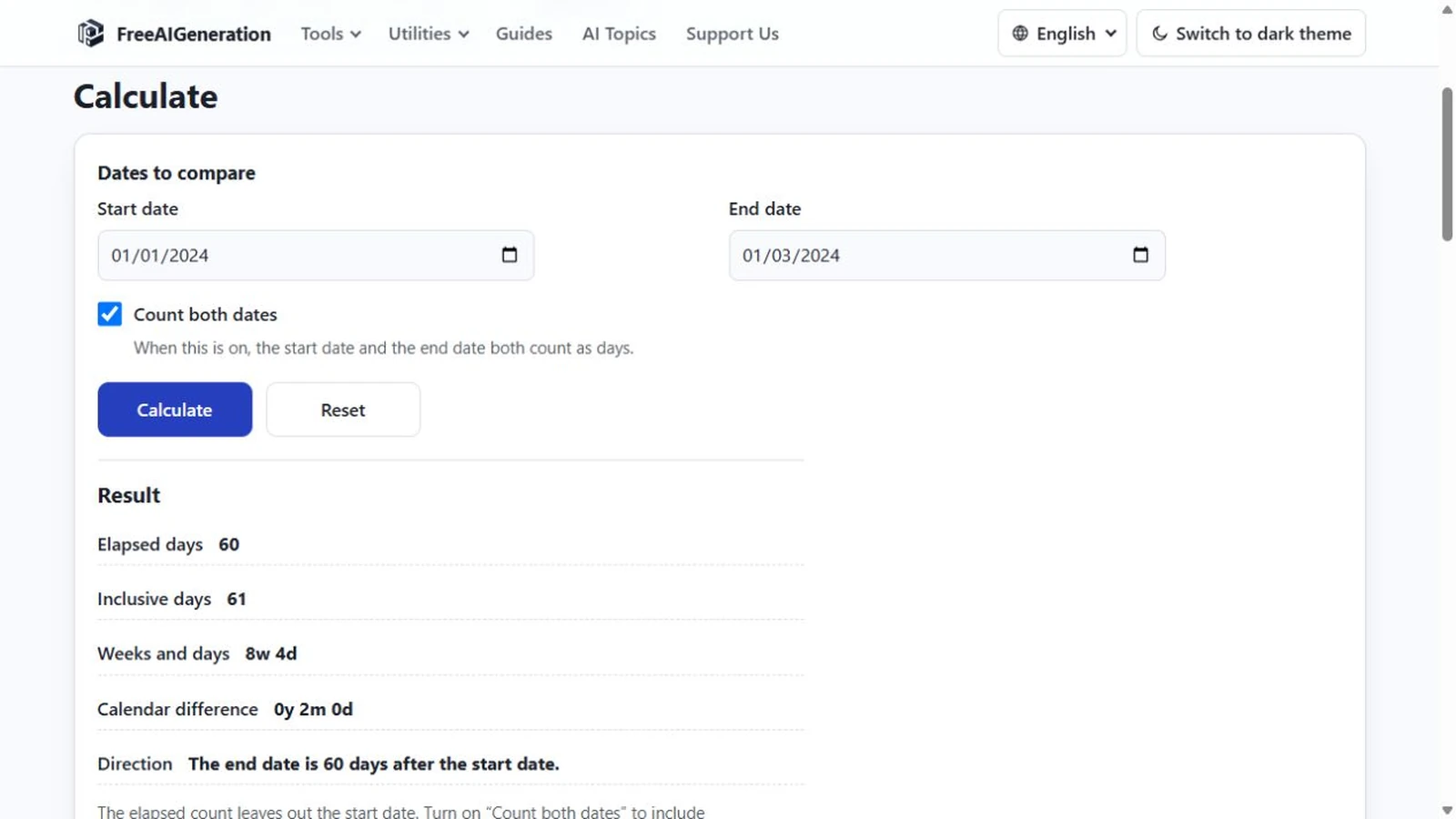
The Days Between Dates Calculator reports the same interval four ways: elapsed days, inclusive days, weeks plus days, and a calendar difference in years, months and days. Only the first two are pure day counts.
The weeks-and-days row is a division with a remainder. Fifty-eight days is eight weeks and two days, because eight sevens are 56 and two are left. Three hundred and sixty-five days is 52 weeks and one day, because 52 sevens are 364.
The calendar difference row behaves like a person rather than a calculator. It counts whole years first, then whole months, then the leftover days.
Months are counted, not converted
There is no safe conversion factor from days to months. Months run from 28 to 31 days, so “one month” is a range, and any single multiplier will be wrong somewhere.
The calculator counts months on the calendar instead. From 1 January 2024 to 1 February 2024 is 31 days and one month. From 1 February to 1 March 2024 is 29 days and also one month. Two different day totals, one month each.
Month-end handling is where this matters most. From 31 January 2024 the calendar difference to 29 February 2024 is one month and zero days, because the shorter month clamps to its last day rather than overflowing into March.
Weeks are exact, and that is why they mislead
A week is seven days, always, so the weeks-and-days row is the only one that divides cleanly. That exactness makes it easy to round down mentally and lose up to six days: 8w 4d is not “eight weeks”, it is 60 days.
The familiar shorthand deserves a check before you use it. Four weeks is 28 days, shorter than every month except a non-leap February, where it matches exactly. Fifty-two weeks is 364 days, one day short of a common year.
Why the rows disagree without being wrong
Take 1 January to 1 March 2024. The elapsed count is 60 days, the weeks-and-days row is 8w 4d, and the calendar difference is 0 years, 2 months, 0 days. All three describe the same interval.
A year shows the point more sharply. From 1 January 2024 to 31 December 2024 the elapsed count is 365 days, the weeks-and-days row is 52w 1d, and the calendar difference is 0 years, 11 months, 30 days. The day total says a year’s worth of days; the calendar reading says the period stops one day short of the anniversary.
A full anniversary reads as exactly one year. From 1 January 2023 to 1 January 2024 is 365 elapsed days and a calendar difference of 1 year, 0 months, 0 days. From 1 January 2024 to 1 January 2025 is 366 elapsed days — the leap day — and again exactly one year.
That is the rule worth remembering: the calendar figure counts anniversaries, and the day figure counts days. Neither converts into the other without knowing the dates.
When a duration string is not a date difference
ISO 8601 can express a duration as a string such as P1Y2M3D or P2W, and those strings describe a length rather than a pair of dates. One month in such a string is a month by definition, not 30 days; P7D and P1W mean the same week. The calculator does not output these strings, and the distinction matters when you copy a duration from a standard or a data feed into a date calculation.
Putting the readings together
Enter your dates once and read the row that answers the question you have. If you need a record of how many days passed, use elapsed days. If you need to explain the gap to a person, the weeks-and-days or calendar row is usually clearer. If you are filling a form that wants years, months and days, use the calendar difference.
The tool runs in the browser tab, with no FreeAIGeneration account required, and it has no storage of its own, so nothing is waiting for you when you return.
Two related guides cover the ground on either side: how the day count itself works and how to work out the days left until a date.
Frequently asked questions
Is one month the same as 30 days?
No. Calendar months run from 28 to 31 days, and the calculator counts months on the calendar rather than converting a day total.
Why does 365 days not always show as one year?
The year figure counts real calendar years between the dates. A 365-day span reads as one year only when the end date falls on the same month and day a year after the start.
Can the calculator add a month to a date?
No. It reports the difference between two dates; moving a date by months is not one of its operations.
Related articles
-
How to Calculate the Number of Days Between Two Dates
Two dates return four numbers: elapsed, inclusive, weeks and days, and calendar difference. Why they disagree, and which one a quoted figure was probably counting.
Utilities & productivity Date & time Calculators Converters 4 min read
Published By Julia M. Gil
-
How to Calculate the Number of Nights Between Two Dates
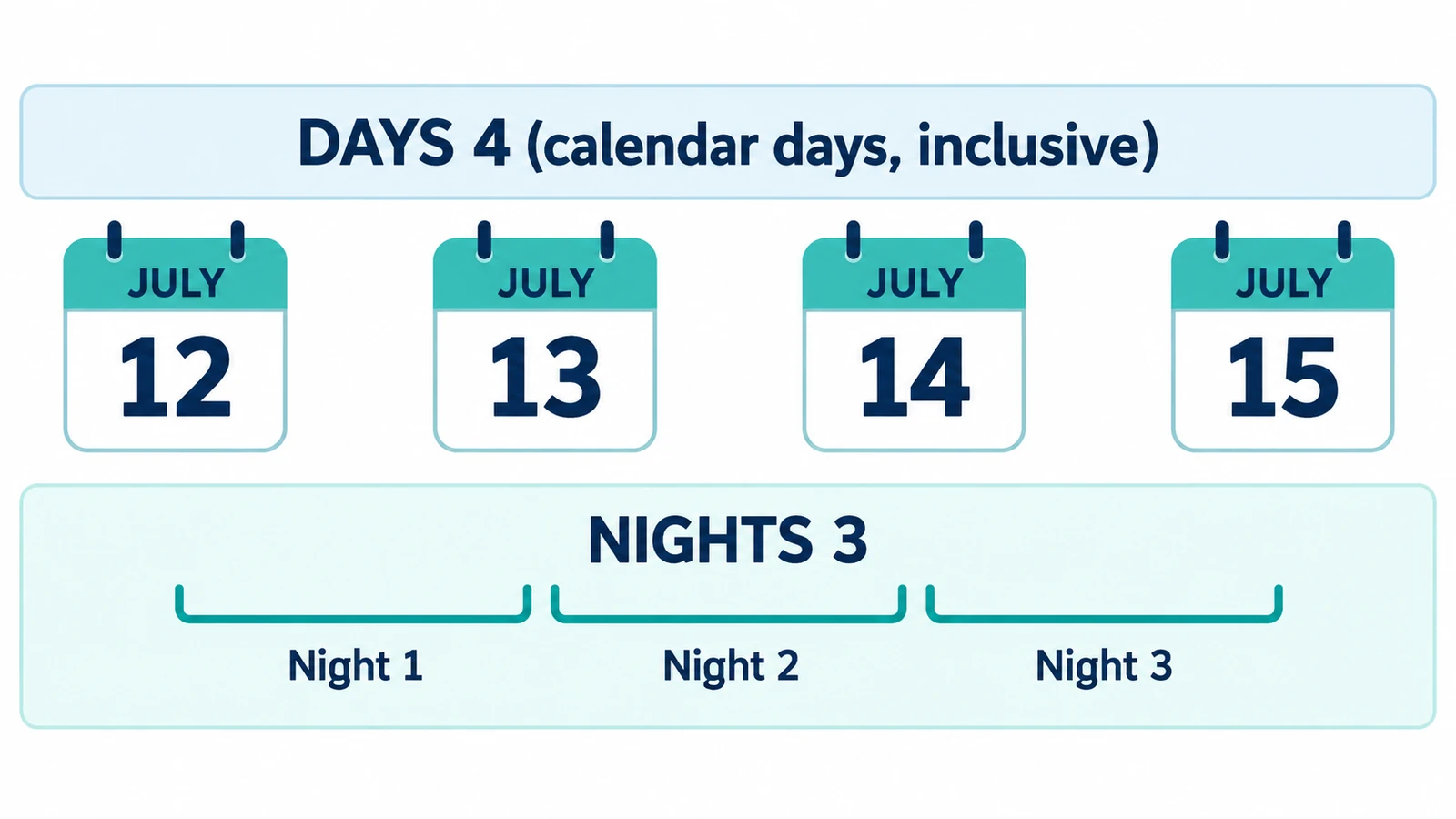
Find the number of nights between a check-in and check-out date and understand why nights usually differ from inclusive day counts.
Utilities & productivity Date & time Calculators Converters 3 min read
Published By Julia M. Gil
-
How to Calculate the Time Between a Start and End Time
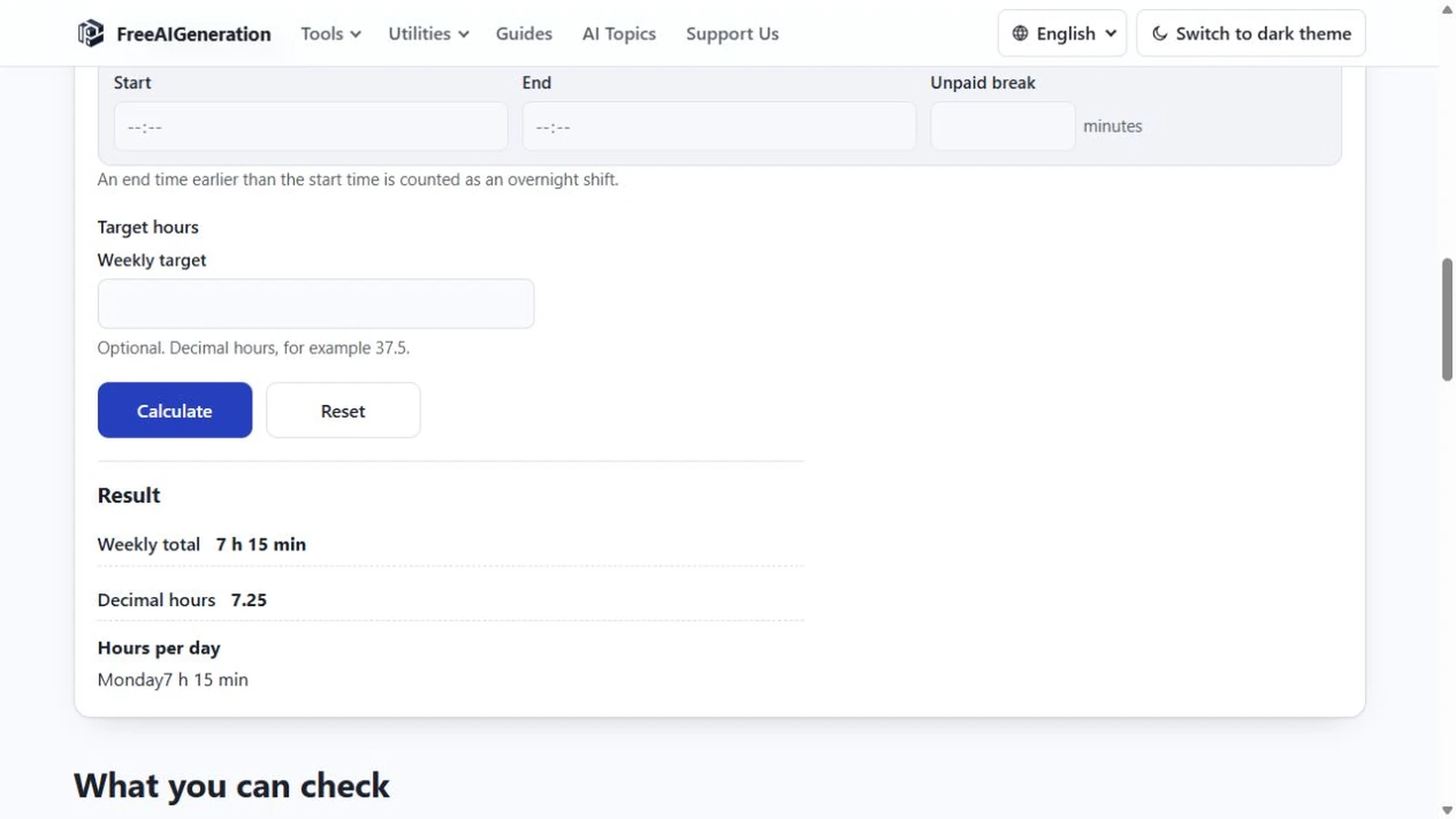
Start and end times give a duration, not a date: identical times return zero, not 24 hours, and a shift past midnight is handled without a 24-hour assumption.
Utilities & productivity Date & time Calculators Converters 3 min read
Published By Julia M. Gil
Keep exploring
FreeAIGeneration is more than this article. The editors and calculators below are real, free and run in your browser.